Guest WiFi your PMS already knows about
Room number and surname, checked against the property management system. The guest is online before they have found the lift, and anything they buy on the network posts to the folio.
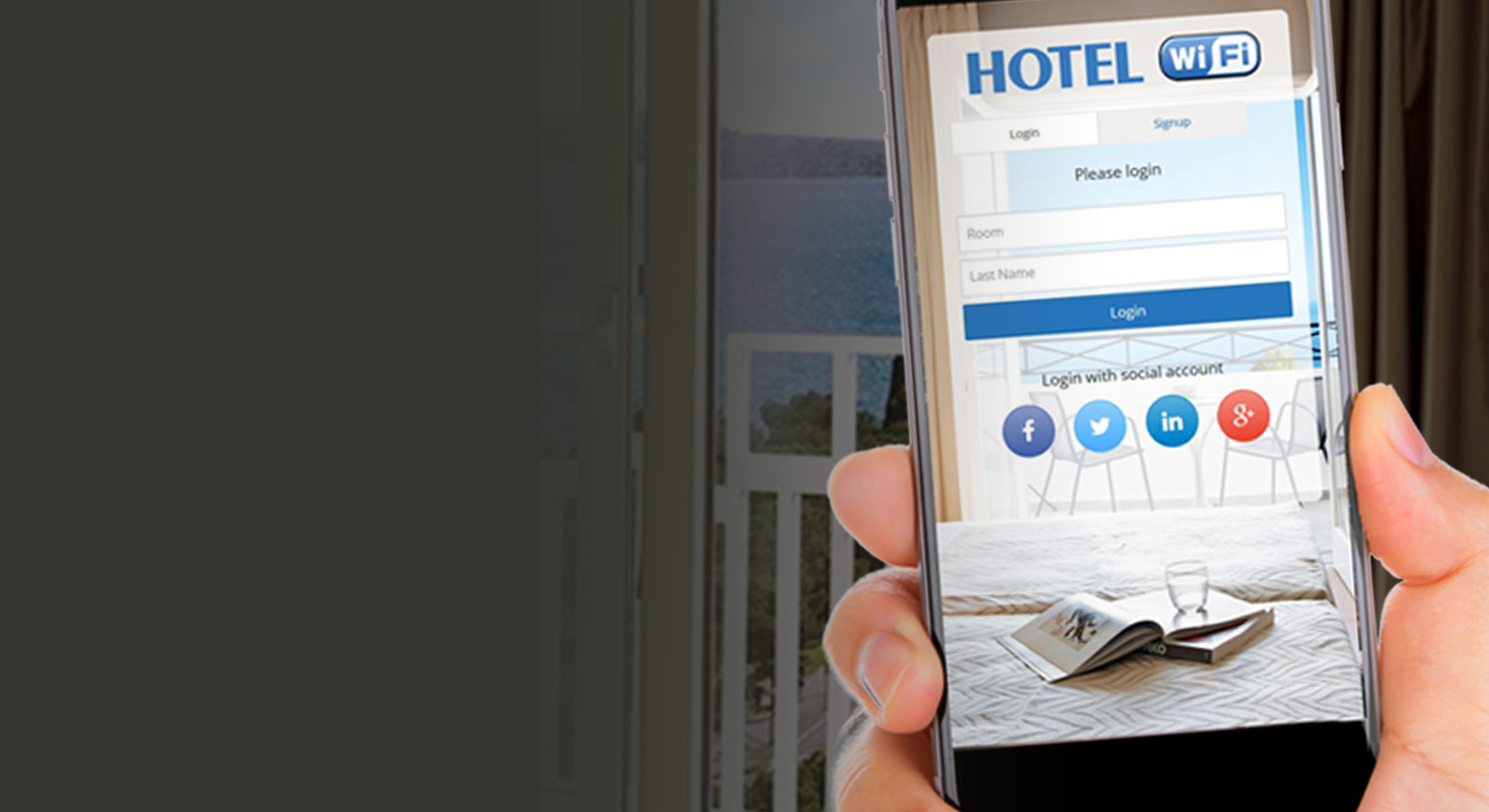
The splash page asks for a room number and a surname and validates both against the PMS. Checked-out guests lose access at midnight without anyone doing anything. Walk-ins and conference delegates get a code that expires with the booking, and paid upgrades — a faster tier for a business guest — appear on the room account rather than a card machine. PMS integration is the one part of the platform quoted on top of the monthly fee: what it costs depends on which PMS you run and how it connects.
Three more that matter in a hotel
A quota per room, a faster tier for suites, and a cap that stops one device flattening the line.
One SSID from the lobby to the last room on the third floor. No second login on the way.
A review request that goes out after check-out, not while the guest is still in the building.
Which hardware path
Access points and a router, shipped configured.
One MikroTik goes in front of what you run today.
Dual-SIM routers for vehicles.
Most hotels already own an estate of access points, so the MikroTik goes in front of it and nothing on the floors changes.
What it costs in a hotel
Hotels are the one case where access points are the wrong unit. A property with a hundred-odd rooms has more access points than it has guests online at once, so hotels are priced on concurrent users at R11.65 each per month. Hotels over 80 concurrent guests move onto that basis, starting at 200 concurrent and rising by 100 per price point. Reckon on two concurrent devices per room.
Concurrency pricing starts at 200 concurrent guests and rises in steps of 100. Below 80 concurrent, a hotel is priced per access point like any other site.
"We have 200 rooms and an estate we are not replacing."
Nothing gets replaced. One MikroTik router goes in front of the network you already run, and your access points carry on broadcasting exactly as they do today. The MikroTik does the splash page, the speed limits, the filtering and the reporting. It is one box and one install visit, and if the WiFi is fine today it will still be fine on the Monday after.
We come back with both prices — per access point and per concurrent user — and tell you which is lower.